Somersets / Ecommerce & operations
Modernising ecommerce and the work behind the shop.
A custom Shopify-backed storefront and business dashboard for an established shaving and skincare brand.
- My role
- Architecture, storefront and dashboard development, cloud delivery
- Period
- 2026
- Delivery
- Rebuild · staging and launch preparation
01 / The business problem
The work behind the brief.
For an established consumer brand, rebuilding a website means preserving familiarity while making the business easier to run. The customer sees product pages and a shopping bag. Behind those pages are product data, offers, imagery, content updates and the people responsible for keeping everything accurate.
I built a modern commerce platform for Somersets around both sides of that problem: a distinctive storefront for customers and an operational dashboard for the business. The work extends from the interface through integrations and hosting.
02 / What I built
From the interface to the underlying system.
A brand-specific shopping experience
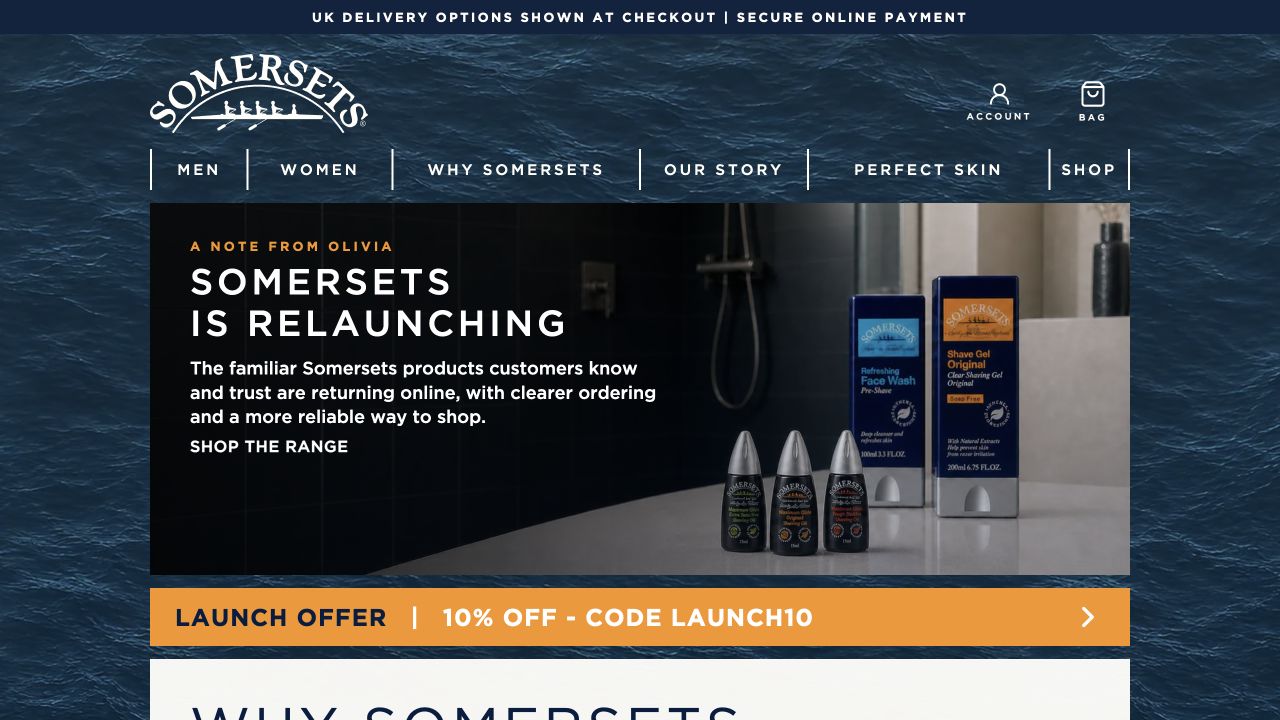
The custom Next.js storefront brings the Somersets identity into product discovery, content pages and shopping flows. Shopify supplies product and cart capabilities, with payment completed through its hosted checkout.
Tools for the people running the shop
The dashboard brings together website publishing, navigation, products, multi-buy offers, media assets and stockist information. It also includes performance, email-campaign and contact-list areas, with access management for operators.
A maintainable delivery foundation
AWS hosting and deployment workflows support the storefront and its supporting tools. Content previews and deployment visibility help connect an operator’s changes to the website customers will see.
A closer look
More of the work.
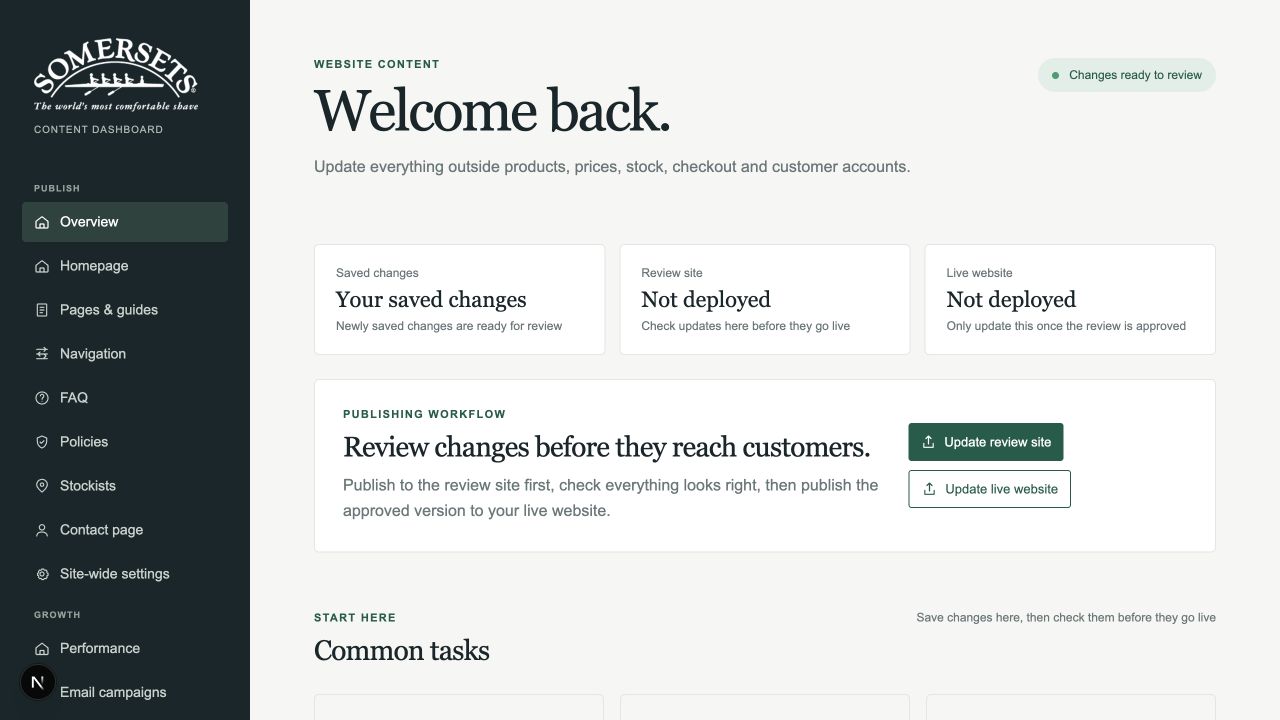
The tools behind the storefront
Actual dashboard in local demonstration mode. Saved changes, review and live publishing are brought into one operator workflow.
View full size ↗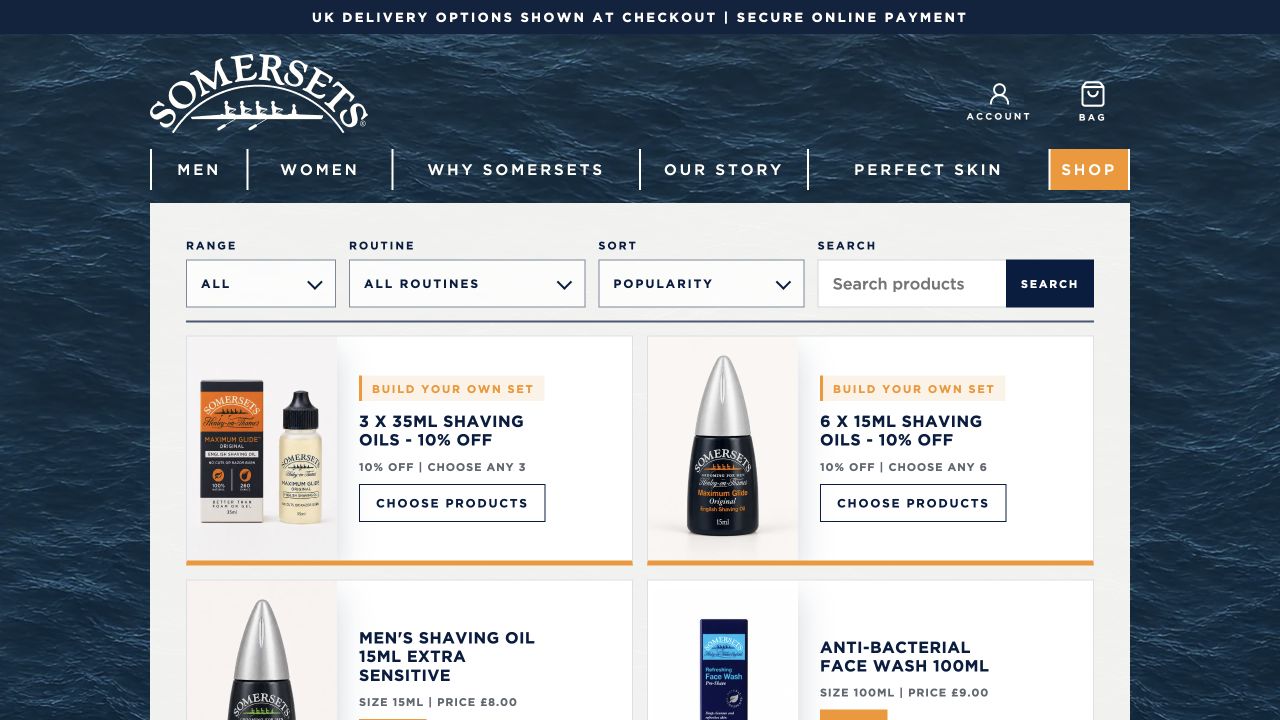
Product discovery and offers
Actual staging shop: range filters, product search and build-your-own sets sit within the custom storefront.
View full size ↗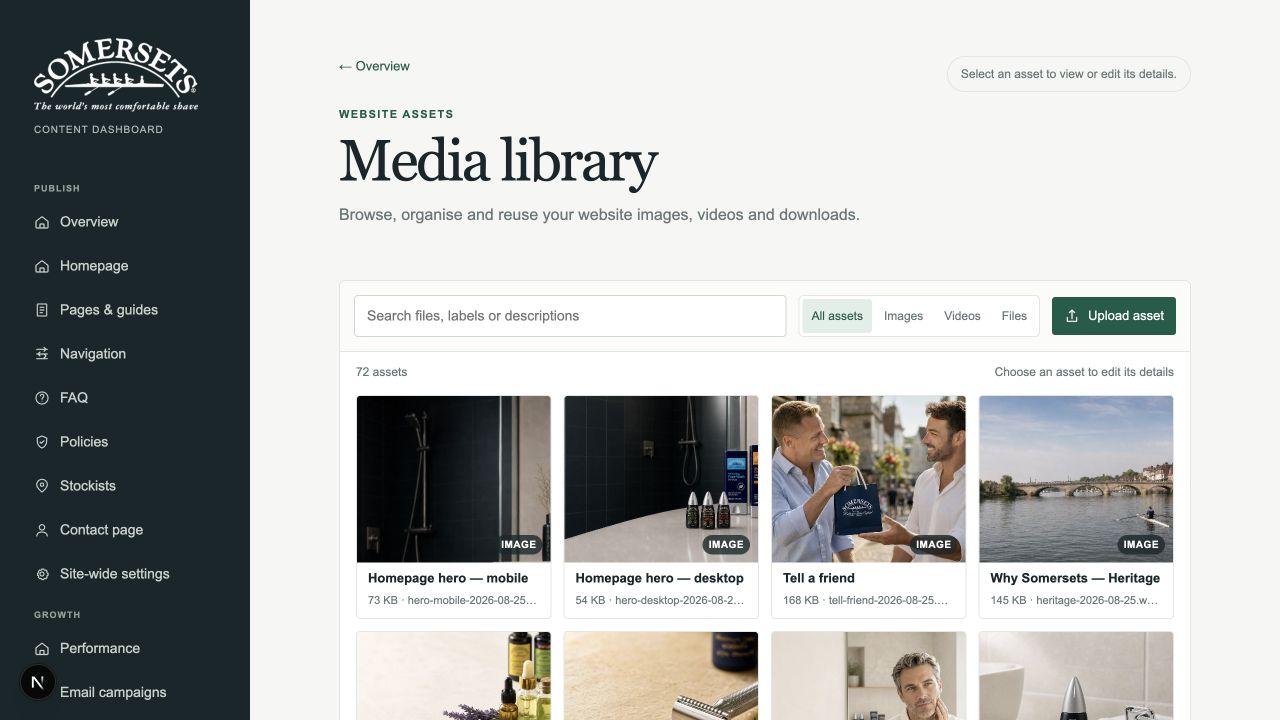
A reusable media library
Actual dashboard in local demonstration mode. Operators can browse, search and reuse the project’s existing website imagery and campaign assets.
View full size ↗How the pieces fit
- 01
Business team
Content, imagery, products and offers
- 02
Storefront
Brand experience and product discovery
- 03
Shopify checkout
Established commerce and payment handoff
03 / Decisions that mattered
The judgement behind the build.
Build the experience; use established commerce
A custom storefront gives the brand control over presentation. Keeping core commerce and hosted checkout in Shopify avoids taking on an unnecessary bespoke payment and order-processing system.
Make everyday changes accessible
The dashboard is organised around publishing, growth, assets, commerce and administration. That makes routine work visible in the language of the business, while the underlying integrations remain managed in code.
Separate review from release
A staging environment provides somewhere to inspect content and exercise shopping flows before launch. Preview links, unsaved-change handling and deployment feedback make that separation useful to operators.
04 / What this enabled
Concrete capabilities. Useful foundations.
- A working custom storefront connected to Shopify products, cart and hosted checkout.
- A central interface for maintaining website content, product offers and media.
- A staging and deployment workflow supporting review before customer-facing release.
The storefront shown is the staging build. Product and checkout flows have been exercised with test orders as part of launch preparation.
05 / Technical detail
For the closer look.
The codebase separates the storefront and dashboard, with dedicated integrations for commerce, content drafts, media, authentication and deployment status. Shopify remains the commerce backend. The dashboard provides business-specific workflows around those services rather than duplicating the entire commerce engine.
- Next.js
- React
- TypeScript
- Shopify
- AWS Amplify
- S3
- Cognito
A similar challenge?
Let’s talk about your business.
If your website has become difficult to maintain, or the team behind it is juggling disconnected tools, I can modernise the customer experience and the workflows that support it. The aim is a system the business can operate after the initial build.